








Quartz countertops, crafted from an engineered blend of crushed quartz crystals, resins, and pigments, have surged in popularity in recent years due to their low maintenance, stain resistance, and versatile aesthetic appeal. In this article, we’ll delve into the optimal thickness for your quartz countertop and the pertinent factors to keep in mind.

Why should you consider the thickness when choosing quartz countertops?
- Better durability versus weight
The thickness of your countertop is crucial for its durability. A standard quartz countertop typically measures 3 cm in thickness, striking the perfect balance between strength and weight distribution without risking strain on the underlying cabinets. Thinner countertops, such as those measuring 1 cm, are more susceptible to damage due to their fragility.
- Aesthetically balanced style
Thinner countertop materials require additional layers for stabilization, typically involving a plywood base and countertop edging to conceal it. This visible edging can reveal the countertop’s lack of thickness and its non-natural stone composition. Conversely, standard countertops can rest directly on cabinets without extra support, achieving a seamless, streamlined appearance.
- Cost efficiency
Thinner countertops often come with a more affordable price tag compared to standard sizes. However, the inclusion of a plywood base layer, along with fabrication and installation expenses, can elevate the overall cost.
Standard countertops boast a lifespan of 20-25+ years, while their 1 cm counterparts typically last around 10-15 years. Despite the initial higher cost of standard countertops, their longer lifespan translates to reduced replacement and installation expenses over time.
Factors that affect the selection of countertop thickness
- Size and use of the countertop
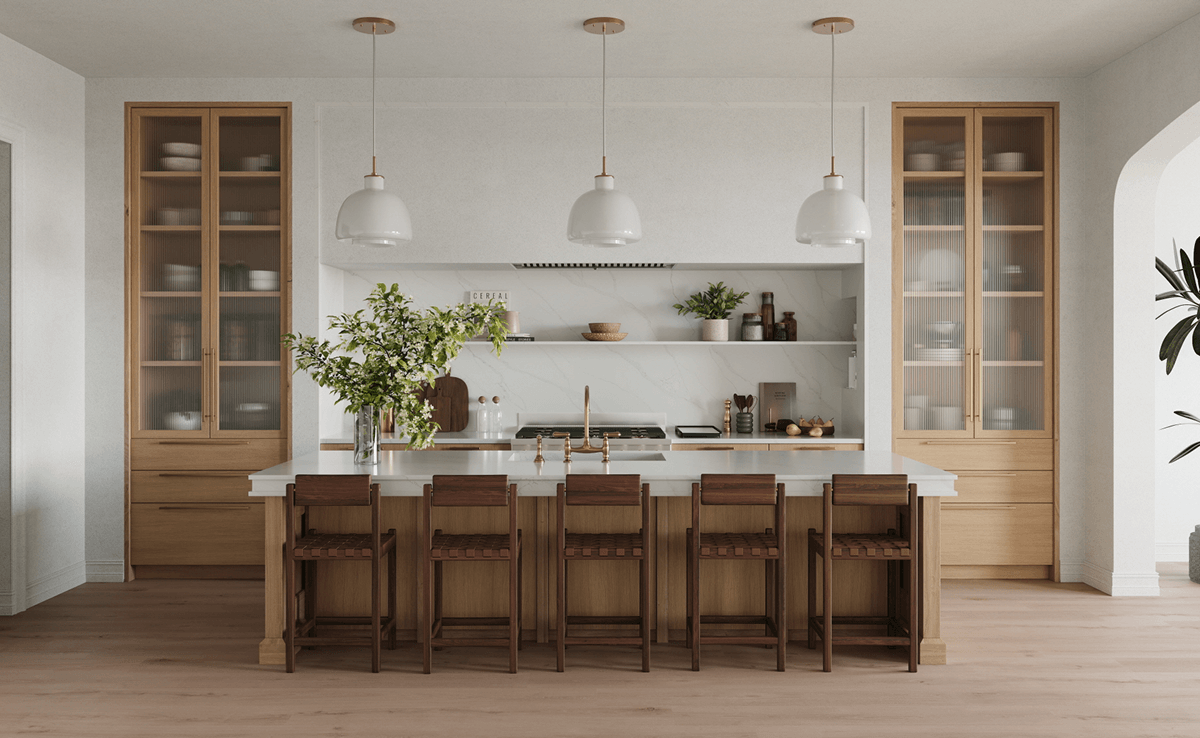
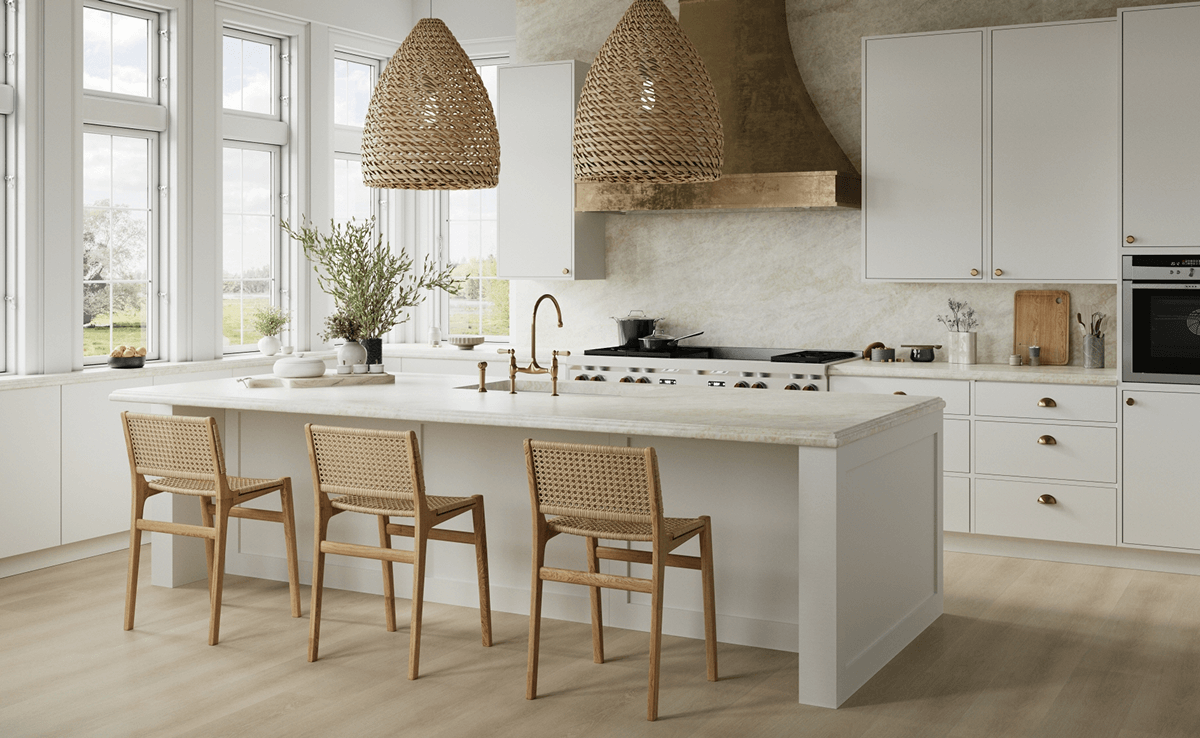
Your countertop’s durability should match its frequency of use. Typically, kitchen countertops face heavier weight, wear, and tear than bathroom ones. Additionally, larger countertops benefit from increased thickness for added durability. For example, a substantial kitchen island countertop in a busy household should be thicker to minimize the risk of breakage. Conversely, a lightly used powder room can make do with a thinner countertop.
- Your budget
Consider your countertop budget and overall renovation expenses. Do you have the flexibility to invest in a high-quality, long-lasting countertop? If so, opting for a standard size offers an excellent return on investment, ensuring durability for years ahead. If you’re seeking a more cost-effective alternative, we suggest choosing a 2 cm countertop. These strike a balance between affordability and durability, typically eliminating the need for additional support bases unlike their 1 cm counterparts.
- The design of the space
Thicker countertops carry a more substantial presence, making them ideal for homes with a luxury design aesthetic. They offer versatility, as they can be customized with various edge profiles to perfectly complement your space. Conversely, thinner countertops are often favored in sleek, modern, or minimal home designs, thanks to their streamlined profile.
Best thickness options of quartz countertops
- 1 cm (3/8 inch) quartz countertops
Countertops measuring 1 cm in thickness are often referred to as thin or narrow slabs. While they offer affordability, they are more susceptible to chipping and breakage compared to thicker alternatives. This thinness is particularly popular for vertical aesthetic applications, such as kitchen backsplashes, thanks to their lighter weight.
- 2 cm (3/4 inch) quartz countertops
Countertops measuring 2 cm in thickness provide a balance between durability and the aesthetic appeal of quartz. They offer slightly more resilience compared to thinner options while still maintaining the inherent beauty of the material. Being a more affordable alternative to standard thickness countertops, they are often suitable for projects with budget constraints.
- 3 cm (1 1/4 inch) quartz countertops
The standard size for quartz countertops is 3 cm. Typically, we recommend this thickness for any surface larger than 24 square inches. These countertops provide superior strength, durability, and longevity compared to thinner alternatives.